 English
 Français
 Español
2025 Bag Making Machine Market Size & Automation Trends | TPLAST
The bag making machine industry is in the midst of a significant transformation. Growing demand for packaging across retail, food, and e-commerce sectors, combined with rapid technological advancements in automation, is reshaping how manufacturers produce bags of all types—plastic, paper, woven, and biodegradable.
If you’re evaluating equipment investments, planning capacity expansion, or simply trying to understand where the market is heading, this article provides a data-driven overview of the 2025 bag making machine market. We’ll examine market size estimates, key growth drivers, regional dynamics, and the automation trends that are redefining production efficiency.
2025 Market Size – A Snapshot of Different Estimates
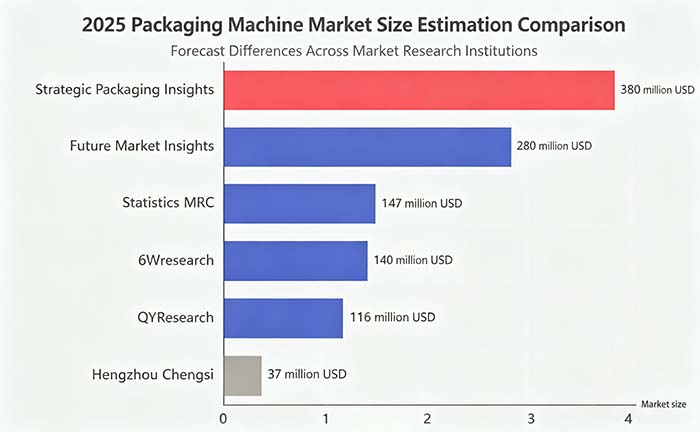
The bag making machine market in 2025 is estimated at various figures depending on report scope and definitions. Here’s a summary of key estimates from leading research firms:
| Source | 2025 Market Value | Forecast Period | Projected Value | CAGR |
|---|---|---|---|---|
| Stratistics MRC | ~$1.47 billion | 2025–2035 | $2.05 billion | 3.5% |
| 6Wresearch | $1.4 billion (2024) | 2025–2031 | $2.1 billion | 4.50% |
| Strategic Packaging Insights | $3.80 billion | 2026–2034 | $6.80 billion | 6.7% |
| QYResearch | ~$1.163 billion | 2026–2032 | $1.618 billion | 4.9% |
| Future Market Insights | $2.8 billion | 2025–2035 | $5.1 billion | — |
| Hengzhou Chengsi | ¥2.68 billion (~$0.37B) | 2024–2031 | ¥3.44 billion | 3.7% |
Note: Variations reflect differences in market definition.
The broader packaging machinery market provides useful context. The global packaging equipment market was valued at approximately $46.59 billion in 2025, growing at a CAGR of 5.5%. The flexible packaging machinery segment alone was valued at $8.5 billion in 2025 and is projected to reach $12.9 billion by 2034 at a CAGR of 4.8%. Bag making machines represent a significant and growing subset of this larger ecosystem.
Once you understand the market landscape, the next step is evaluating specific machine configurations. See our bag making machine series for an overview of available automation levels and configurations.
Key Growth Drivers – What’s Fueling Market Expansion?
Multiple factors are driving demand for bag making machines in 2025:
1. E-commerce and retail expansion
The surge in online shopping has significantly boosted the need for diverse bag types—shopping bags, shipping pouches, and protective packaging. As e-commerce continues to grow globally, demand for bag making equipment follows.
2. Sustainable packaging requirements
Increasing regulatory pressure and consumer preference for eco-friendly packaging are driving the development of machines capable of producing biodegradable, recyclable, and paper-based bags. Manufacturers are investing in equipment that can handle recycled materials and biodegradable films.
3. Automation and efficiency
Manufacturers are adopting automated solutions to enhance efficiency, reduce labor costs, and improve production consistency. Technological advancements in servo motors, PLC systems, and digital integration are key enablers.
4. Industrialization in emerging economies
Rapid urbanization and industrial growth in Asia-Pacific, Africa, and Latin America are creating substantial demand for packaging solutions. These regions are both major producers and consumers of bag making machines.
5. Shift from manual to automated production
As labor costs rise and quality requirements tighten, manufacturers are replacing semi-automatic and manual machines with fully automatic systems.
Automation Trends – The Technology Transformation
Automation is arguably the most significant trend shaping the bag making machine market in 2025. Here’s what’s happening:
Servo motors and precision control
Modern bag making machines increasingly incorporate servo motors, which enable precise control over cutting, sealing, and stacking processes. Servo-driven systems can push production past 400 bags per minute while maintaining tight tolerances. For operators, this means consistent quality and reduced material waste.
PLC and touchscreen interfaces
Programmable Logic Controllers (PLC) combined with touchscreen human-machine interfaces (HMI) have become standard. Operators can set parameters such as bag length, width, and sealing temperature through an intuitive interface, and the system automatically adjusts mechanical movements. This reduces setup time and minimizes operator error.
Industry 4.0 and IoT integration
Bag making machines are becoming part of intelligent manufacturing ecosystems. Industrial sensors monitor parameters in real time, and IoT connectivity enables data collection and analysis. This integration supports:
-
Real-time quality control through machine vision systems
-
Predictive maintenance that can reduce downtime by up to 40%
-
Remote monitoring and diagnostics
Predictive maintenance
Sensors now track motor loads, sealing temperatures, and production speeds in real time. This allows maintenance teams to prevent failures before they occur, ensuring continuous operation. Predictive maintenance reduces operational risk, minimizes production losses, and extends the lifespan of expensive machinery.
Automatic stacking and material handling
Modern machines include automatic stacking, palletizing, and film feeding systems that reduce manual intervention. This not only lowers labor costs but also reduces the risk of production errors, damaged bags, and safety incidents.
Flexible and modular configurations
Manufacturers increasingly demand machines that integrate printing, lamination, perforation, and handle insertion without requiring separate production lines. Modular designs make it easier to upgrade machines as technology advances, offering long-term flexibility.
Regional Market Dynamics
Asia-Pacific – The dominant force
Asia-Pacific remains the leading hub for both production and consumption of bag making machines. Large manufacturing bases in China, India, and Southeast Asia drive demand. Countries like Vietnam, Indonesia, and Bangladesh lead regional demand due to their massive agricultural and industrial sectors. The region continues to dominate global consumption due to manufacturing volume, export-driven production, and ongoing automation upgrades.
North America – Innovation and automation
The North American market holds a significant share, driven by innovation in automation and manufacturing processes. The region is characterized by high industry maturity and ongoing investment in sustainable packaging technologies. In 2025, the United States implemented revised tariff measures that have generated significant ripples across bag making machinery supply chains. Key raw material imports now face elevated duties, prompting equipment manufacturers and end users to reevaluate sourcing strategies.
Europe – Sustainability focus
European markets are heavily influenced by regulations promoting sustainability and eco-friendly packaging solutions. High adoption of green technologies is a notable characteristic.
Challenges Facing the Market
Despite positive growth projections, the bag making machine market faces several challenges:
Regulatory restrictions on plastic
Environmental concerns and regulations on single-use plastics are pushing manufacturers to innovate and develop eco-friendly alternatives. This shift presents both a challenge and an opportunity—manufacturers must invest in R&D for machines that can process alternative materials.
High initial investment
The cost of advanced, fully automatic machinery can be a barrier for small and medium enterprises. However, long-term cost savings and increased production efficiency often justify the investment.
Supply chain and tariff uncertainties
The 2025 U.S. tariff adjustments have prompted many producers to explore alternative suppliers or accelerate localization efforts. These adjustments have reshuffled the competitive landscape, with suppliers with established U.S. manufacturing footprints gaining prominence.
Competitive pressure
Intense competition among key players leads to price wars and margin pressures. Companies need to constantly invest in R&D to stay competitive.
For operations looking to integrate bag making with upstream film production, understanding material consistency is essential. See how film blowing machine quality affects downstream bag making efficiency.
What This Means for Bag Manufacturers
For plastic product manufacturers considering equipment investments, the 2025 market trends suggest several strategic considerations:
1. Automation is no longer optional – As labor costs rise and quality expectations increase, investing in automated bag making machines is becoming a competitive necessity rather than a luxury.
2. Flexibility matters – Machines that can handle multiple bag types, materials, and sizes offer better ROI in a market characterized by diverse and changing customer demands.
3. Sustainability drives demand – Equipment capable of processing recycled materials and biodegradable films is increasingly in demand. Manufacturers who invest in such capabilities can access growing market segments.
4. Regional dynamics affect sourcing – Tariff changes and supply chain shifts may make local or regional suppliers more attractive. Evaluating total cost of ownership—including shipping, tariffs, and after-sales support—is more important than ever.
From Market Trends to Equipment Selection
The 2025 bag making machine market is characterized by steady growth, accelerating automation, and a clear shift toward sustainable production capabilities. Market size estimates vary—from approximately $1.47 billion to $3.80 billion depending on scope—but all point to continued expansion driven by e-commerce, industrialization, and technological innovation.
Understanding these trends is the first step. The next logical step is evaluating how specific machine configurations—automation level, lane count, sealing method, and material compatibility—align with your production requirements and growth plans.
Once you understand the market trends, the next consideration is how to choose the right automation level for your operation. Continue reading: “Fully Auto vs Semi-Auto Bag Making Machine – Differences | TPLAST?”.
Related Reading
After reviewing the 2025 market landscape and automation trends, these related articles can help you make more informed equipment decisions:
-
Fully Auto vs Semi-Auto Bag Making Machine – Differences | TPLAST
-
Heat Sealing vs. Cold Cutting – Which Bag Edge Finish Suits Your Product Mix?
-
Is a 6 Lines Bag Making Machine Worth the Investment?
-
Film Blowing to Bag Making: Building an Integrated Production Line
-
How to Set Up a 4 Lines Heat Sealing Bag Making Machine
This article is part of TPLAST’s technical content library. No direct sales or pricing information is included. All technical discussions aim to help you make informed purchasing decisions.