 English
 Français
 Español
How to Fix Inconsistent Bag Length on Your Bag Making Machine
You set the bag length on your machine, start production, and everything looks fine—until you measure the finished bags. Some are 5 mm longer than they should be. Others are 3 mm short. The variation accumulates, and before you know it, you've wasted film, time, and customer trust.
Inconsistent bag length is one of the most common—and most frustrating—issues in bag making. At high speeds, even small deviations multiply quickly. A machine rated for 200 bags per minute that produces inconsistent lengths may deliver far less usable output than a slower but more stable unit.
The good news? Most length inconsistency problems have identifiable root causes and fixable solutions. This guide walks through the most common culprits and what to do about each one.
Why Bag Length Inconsistency Happens
Bag length is determined by a coordinated system of film feeding, sealing, and cutting units. When any part of this system drifts out of alignment, the finished bag length changes. The deviation can come from mechanical components, electrical controls, or the film itself.
The Most Common Root Causes:
Tension instability — Fluctuating film tension stretches or relaxes the material, changing the actual feed length. As the roll diameter decreases, tension can shift if the unwinder isn't compensating properly.Servo or encoder issues — Incorrect servo parameters, loose encoder couplings, or faulty feedback devices can produce position errors that directly affect bag length.Photoelectric sensor problems — Dust on the sensor lens, incorrect sensitivity settings, or misalignment can cause the machine to misread registration marks.Mechanical wear — Worn timing belts, loose pulleys, or slipping feed rollers introduce mechanical play that translates directly into length variation.Incorrect parameter settings — The preset film feeding length may not match the actual film characteristics.
Tension Control: The Foundation of Consistent Length
Tension is arguably the most critical factor in bag length consistency. If the film is pulled too tight, it stretches—and the bag comes out longer than the set value. If it's too loose, the film slips—and the bag comes out short.
What to check:
Unwinder tension compensation — As the film roll diameter decreases, the unwinder must adjust to maintain constant tension. If your machine uses a dancer roller system, check that it's moving freely and providing proper compensation.Feed roller nip pressure — Insufficient pressure between the feed rollers allows the film to slip. Worn rubber rollers are a common culprit. Clean or replace rollers that show signs of wear.Tension setpoint calibration — Different film materials and thicknesses require different tension settings. What works for 150 GSM PE may not work for 350 GSM material.
Servo Motor and Encoder Accuracy
Modern bag making machines use servo motors for length control because they offer high precision and responsiveness. A high-quality servo-driven system can typically hold bag length accuracy within ±0.3 mm to ±0.5 mm. But even the best servo system is only as accurate as its setup and maintenance.
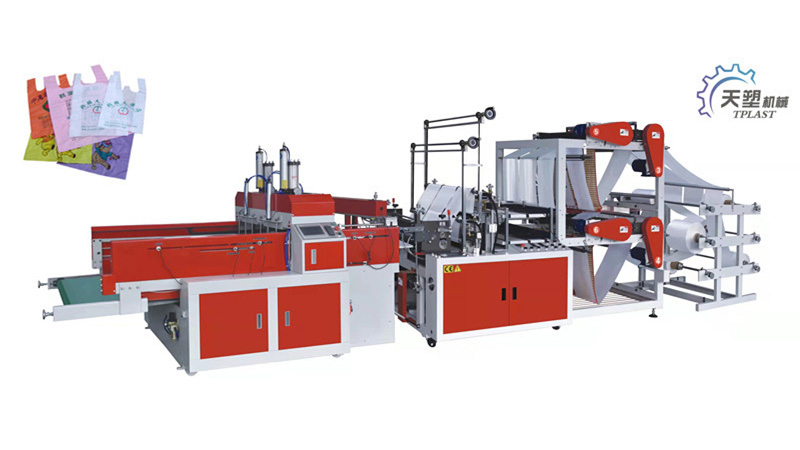
Common servo-related issues:
Encoder coupling looseness — If the encoder coupling is loose, the feedback signal won't match the actual motor position. Tighten the coupling and verify alignment.Incorrect servo parameters — Wrong gain settings or acceleration curves can cause overshoot or undershoot in film feeding. Review the parameter settings against the machine manual and adjust gradually.Mechanical binding — If the rubber roller connection to the servo motor has a blockage or binding issue, the feed will be inconsistent.
Photoelectric Registration and Sensor Issues
For printed bags, the photoelectric sensor (electric eye) tracks registration marks to determine where each bag should be cut. If the sensor isn't reading correctly, the bag length drifts.
What to check:
Sensor cleanliness — Dust and debris on the sensor lens are among the most common causes of tracking errors. Clean the lens regularly with a soft, lint-free cloth.Sensor alignment — Verify that the sensor is mounted rigidly and aimed correctly at the registration marks.Sensitivity settings — If the sensor is too sensitive, it may pick up false signals from film flutter or reflections. If it's not sensitive enough, it may miss marks entirely. Adjust the threshold according to the manufacturer's specifications.Registration mark quality — Poorly printed or inconsistent registration marks can confuse the sensor. Check the film for print quality issues.
Mechanical Drive and Feed System
Even with perfect electronics, mechanical wear can introduce length errors. The feed system relies on belts, chains, pulleys, and rollers working together with zero play.
Key mechanical checks:
Timing belts and chains — Check for wear, stretching, or looseness. A loose belt changes the effective feed length.Pulley and shaft connections — Loose set screws or keyway wear can introduce rotational play. Inspect and tighten all connections.Feed roller condition — Rubber rollers wear over time. Check for flat spots, glazing, or uneven surfaces that reduce grip.Bearing condition — Worn bearings in the feed roller assembly can cause erratic film movement.
Parameter Settings: The Simple Fix
Sometimes the problem isn't mechanical or electrical—it's simply that the settings don't match the actual conditions.
What to verify:
Set length vs. actual length — Measure the actual film feed with a ruler and compare it to the set value. If there's a consistent offset, adjust the parameter.Speed-related drift — Some machines show length variation at different speeds. If the problem appears only at high speed, try reducing speed gradually to identify the threshold.Film thickness compensation — Thicker films may require different feed settings than thinner ones.
A Systematic Troubleshooting Approach
When you encounter inconsistent bag length, resist the urge to change multiple settings at once. A systematic approach saves time and prevents new problems.
Summary
Inconsistent bag length isn't just a quality issue—it's a cost issue. Every bag that falls outside specification is wasted material, wasted time, and potentially a lost customer.
Key takeaways:
Tension control is foundational — Fluctuating tension is the single most common cause of length variation.Servo systems require proper setup — Even the best servo motor won't deliver accuracy if parameters are wrong or mechanical connections are loose.Clean sensors regularly — Dust on the photoelectric sensor is a frequent and easily preventable problem.Inspect mechanical components — Worn belts, pulleys, and rollers introduce play that translates directly into length error.Troubleshoot systematically — Change one variable at a time and document the results.
Need Help Diagnosing Your Bag Length Issues?
Every production line is different. Whether you're dealing with length inconsistency on a new machine or an older unit that's gradually drifting out of spec, our team can help identify the root cause and recommend the right solution.