 English
 Français
 Español
How to Set Up a 4 Lines Heat Sealing Bag Making Machine | TPLAST
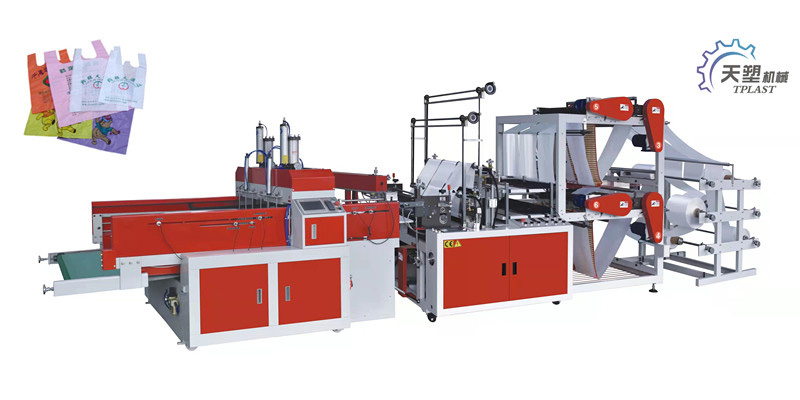
You have a 4-lines heat sealing bag-making machine on your production floor. The crates are unpacked, the power is connected, and the first film rolls are ready. Now comes the critical question: how do you set it up correctly to produce consistent, high-quality bags from the very first run?
A 4-line machine is not simply four single-line machines bolted together. It is a parallel processing system where two film layers, each carrying four bag widths, move through shared sealing and cutting stations in a synchronized sequence. This means setup involves coordinating multiple lanes simultaneously—and small errors in one lane can affect all four. This guide provides a structured, step-by-step approach to setting up your 4-lines heat sealing bag making machine, covering everything from mechanical preparation to fine-tuning for production.
Understanding What “4 Lines” Means for Setup
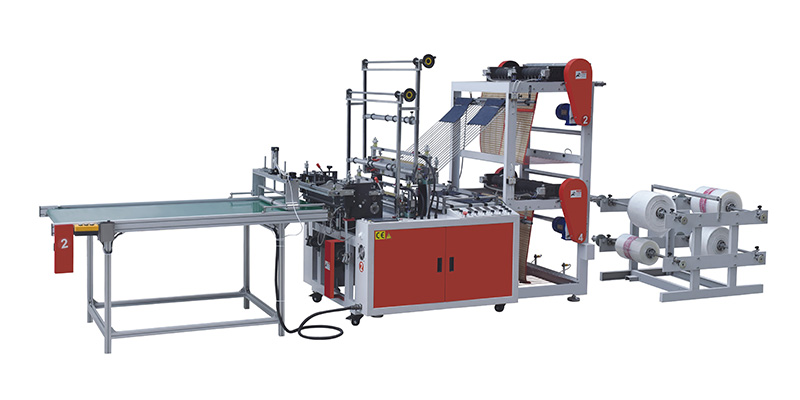
Before turning any dials, it helps to understand what you are setting up. A 4-lines configuration typically means the machine produces four bags side-by-side across the width of the film in each cycle. Many 4-lines machines also feature a double-layer design: two separate film layers feed through the machine simultaneously, each carrying four lanes, effectively producing eight bags per cycle.
What this means for setup:
-
Four lanes must be aligned simultaneously – sealing and cutting tooling spans the entire web width and processes all positions in each cycle.
-
Tension must be balanced across all film rolls – inconsistent tension in one roll can cause length variation across all four lanes.
-
Temperature settings may need lane-specific adjustment – each heating element can often be adjusted separately to compensate for material variations.
The setup process for a 4-lines machine is more detailed than for a single-line machine, but the reward is substantial: a properly configured 4-lines machine can produce 1,400–1,700 bags per minute under typical operating conditions.
Once you understand the setup fundamentals, comparing the specific features and control systems across different bag making machine models can help you optimize your configuration. See our bag making machine series for an overview of available lane configurations and control options.
Mechanical Preparation and Safety Checks
Every setup begins with a clean, safe workspace. Before loading film or adjusting any settings:
Clear the work area
Check whether there is dust or debris around the equipment and remove them. Loose material can interfere with sensors, contaminate seals, or create fire hazards near heated sealing elements.
Inspect sealing components
Verify that the heat sealing knife, slitting knife, and any punching tools are correctly installed and free from damage. For a 4-lines machine, this means checking that all lane-specific tooling is present and properly seated.
Check cooling system
The cooling water for the bag making machine is typically tap water or circulating water at about 20°C. Ensure the cooling circuit is connected and functioning—insufficient cooling can weaken seal strength and cause film to stick to sealing bars.
Verify electrical connections
Confirm that all power connections are secure and that emergency stop buttons are accessible and functional.
Loading Film and Establishing Tension
Film loading is where many setup errors originate. For a 4-lines double-layer machine, you are managing multiple film rolls simultaneously—and tension consistency across all rolls is non-negotiable.
Load the film rolls
Load the film rolls according to the production notice requirements. For a double-layer configuration, this means loading film for both layers—each layer typically has its own unwind station.
Set initial tension
The unwind stands typically use pneumatic or magnetic braking systems that maintain consistent back-tension as the roll diameter decreases. Set the tension according to the film type and thickness. For standard PE films, tension setpoints typically range from 20–30 N for a 600 mm wide film; for softer or biodegradable films, significantly lower tension (5–15 N) may be required.
Why tension matters
If tension is too high, the film may stretch, causing bags to come out longer than specified. If tension is too low, the film may wrinkle or feed unevenly, creating inconsistent seals. In a 4-lane machine, tension variation between rolls will produce bags of different lengths across the four lanes—a quality defect that is difficult to correct downstream.
Thread the film path
Thread the film through the guide rollers according to the machine’s film flow chart. Most machines use a dancer roller system with floating rollers attached to pneumatic cylinders that automatically adjust position to maintain preset tension levels. Follow the manufacturer’s diagram carefully—incorrect threading is one of the most common causes of setup delays.
Setting Bag Dimensions and Tooling Position
With film loaded and tension established, the next step is to configure the machine for the specific bag size you are producing.
Set bag width and length
Adjust the width of the feeding way and the width and height of the adjustable bag former (or change the fixed bag former) according to the product's size. Enter the bag length and production data through the machine’s control interface.
Position the sealing and cutting knives
Adjust the size of the bag according to the production notice and process documents, install the heat sealing knife, and preliminarily adjust the position of the slitting knife and heat sealing knife. Adjust the heat sealing knife so that it seals within the required range of the bag.
Adjust lane-specific tooling
For a 4-lane machine, each lane may have its own set of sealing and cutting elements. Ensure that all four lanes are aligned to produce bags of identical dimensions. If the machine supports producing different bag sizes across lanes, confirm that the tooling matches the intended specifications for each lane.
Setting Heat Sealing Parameters
Heat sealing is the most critical operation in a bag making machine, as it determines the bag’s integrity, strength, and barrier properties. Proper heat sealing requires precise control of three interdependent parameters: temperature, pressure, and dwell time.
Set sealing temperature
Turn on the power and set the temperature of the heat sealing knife according to the requirements of the process documents. For a 4-lines machine, there are typically four heating elements, and each working temperature can be adjusted separately.
General temperature guidelines for common materials:
| Film Material | Recommended Sealing Temperature Range |
|---|---|
| LDPE | 120–160°C |
| HDPE | 160–200°C |
| PP | 170–220°C |
| Biodegradable PLA | 100–140°C |
Why temperature matters
If the temperature is too low, seals will be weak (cold seal). If too high, the film may burn through, whiten, or degrade. Temperature uniformity across the sealing bar is crucial—a variation of just ±2°C can affect seal strength.
Set sealing pressure
The heat sealing pressure is typically provided by pressure springs or pneumatic systems on the bag making machine. The appropriate pressure depends on the film’s function, thickness, and heat sealing width. A typical setting for many applications is around 2 kg (approximately 2 bar) of pneumatic pressure.
Allow warm-up time
Keep in mind that it may take 20–30 minutes for the sealing bars to rise to the set temperature. Do not begin production until the temperature has stabilized.
Photocell Registration
If you are running printed film with registration marks, the photocell (optical eye) must be properly set up to ensure accurate print alignment.
Position the mark sensor
Adjust the position of the mark sensor so that the mark of the film will be detected correctly. Select the edge of the pattern with large color difference and adjust the photoeye sensitivity to meet the requirements.
Enable registration
Enter the option page on the control interface and turn on the photo registration function.
Verify registration
Run the machine slowly without product to check the offset distance to the correct cutting position, and input the cutting offset distance value as needed.
Trial Run and Fine-Tuning
With all parameters set, it is time to run the machine and verify quality.
Start at low speed
Start the main motor and run it at low speed. Then adjust the side position control to center the film in the middle position.
Align films and patterns
Adjust the left and right clamp rollers to align the left and right films, and adjust the front and rear clamp rollers to align the pattern. In a 4-lines machine, this alignment must be confirmed across all four lanes.
Take sample bags
Preliminarily adjust the machine speed, take a sample bag, and conduct a preliminary inspection. Check for:
-
Seal strength and appearance (should be clear and uniform, without bubbles, burns, or wrinkles)
-
Bag length consistency across all four lanes
-
Print registration accuracy (if applicable)
-
Edge quality and cutting precision
Make incremental adjustments
If the sample does not meet specifications, take another sample and adjust the heat sealing parameters, tension, or tooling position as needed. Common issues and their remedies:
| Defect | Likely Cause | Remedy |
|---|---|---|
| Weak seal | Temperature too low or pressure insufficient | Increase temperature or pressure |
| Burn-through | Temperature too high or pressure excessive | Lower temperature or pressure |
| Inconsistent seal across lanes | Uneven temperature or pressure across sealing bar | Check heating elements and pressure settings per lane |
| Bag length variation | Inconsistent tension | Adjust tension settings; check dancer roller operation |
Quality inspection
The machine quality inspector should conduct a formal inspection. After passing the inspection, the product can proceed to production.
For operations running multi-lane configurations, upstream film quality directly impacts setup success and production consistency. See how film blowing machine output affects downstream bag making performance.
Common Setup Challenges for 4-Lines Machines
1. Balancing tension across four lanes
Solution: Use the dancer roller system to maintain consistent tension. If the machine has individual tension controls per lane, calibrate each lane separately before production.
2. Achieving uniform temperature across the sealing bar
Solution: Modern machines use PID controllers with auto-tuning to maintain temperature stability. Allow adequate warm-up time and verify temperature at multiple points across the bar.
3. Aligning printed patterns across all lanes
Solution: The photocell registration system must be properly calibrated. Run at low speed initially and verify registration before ramping up to production speed.
4. Managing changeovers between bag sizes
Solution: Document the settings for each bag size (temperature, pressure, bag length, tension) so changeovers can be executed quickly and consistently.
From Setup to Production – Next Steps
A successful setup is the foundation of efficient production. Once your 4-lines heat sealing bag making machine is calibrated and producing quality samples, the focus shifts to monitoring and optimization.
During production, observe the bag-making situation at any time and make immediate adjustments if any abnormalities are found. Regular quality checks—particularly seal strength testing using a peel tester—help catch issues before they become widespread defects.
Related Reading
After mastering the setup process for your 4-line bag making machine, these related articles can help you optimize your entire bag production line:
-
Quick Changeover Techniques for Bag Making Machines – Reducing Downtime Between Orders
-
Fully Auto vs. Semi-Auto Bag Making Machine – Which Automation Level Fits Your Production?
-
Heat Sealing vs. Cold Cutting – Which Bag Edge Finish Suits Your Product Mix?
-
Common Bag Making Defects – Causes and How to Prevent Them
-
Film Blowing to Bag Making: Building an Integrated Production Line
This article is part of TPLAST’s technical content library. No direct sales or pricing information is included. All technical discussions aim to help you make informed purchasing decisions.