 English
 Français
 Español
Heat Sealing vs Cold Cutting Bag Making Machine – Which | TPLAST
You’ve selected the film material, finalized the bag dimensions, and outlined your monthly production targets. But one decision remains—should the bag edges be cut and sealed in a single step, or sealed first and then cut separately?
The choice between heat sealing hot-cut and heat sealing cold-cut bag making machines goes beyond a single mechanical setting. It affects seal strength, edge appearance, material waste, and even which types of bags your line can produce. This guide walks through the working principles of each method, when each excels, and how to match them to your actual product mix.
Understanding the Two Processes – How Each Method Shapes the Bag
Before comparing, it helps to understand what happens inside the machine during the bag-making cycle. Both methods share a common starting point: a heat-sealing step that melts and bonds the plastic film along the bottom seal. The difference lies in how the machine separates the finished bag from the continuous film web.
Heat sealing hot-cut: The machine first creates the bottom seal using a heated sealing knife. Then, immediately after sealing, a second heated knife cuts through the film. Because the cutting blade is also hot, the cut edge melts and fuses closed at the same moment as the cut. This leaves the bag with its top opening sealed shut—producing a “closed-top” bag. The design is widely used for T-shirt bags and bottom-seal bags. In fact, it is the standard configuration for supermarket vest bags, where the reinforced seal at the cut edge provides added durability during loading.
Heat sealing cold-cut: The machine first creates the bottom seal using a heated sealing knife. However, instead of a heated cutting blade, a cold knife performs the cutting action. Since the cutting blade is not heated, the cut edge remains open—producing a bag with a clean, open top. This design is used for flat bags, garbage bags, and any bag where the customer will fill from the top.
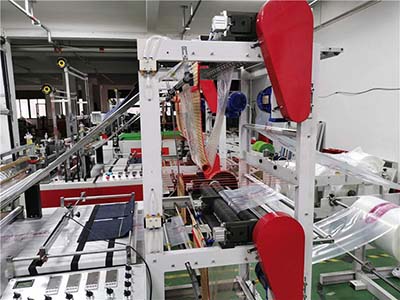
For manufacturers whose product mix includes both vest bags and flat bags, understanding this difference is essential: a hot-cut configuration cannot easily switch to flat bag production because the cut edge is sealed shut. In contrast, cold-cut machines can produce vest bags and flat bags.
Once you’ve clarified the bag types you plan to run, reviewing how different machine series handle both vest and flat bag configurations can help narrow your options further. See our bag making machine series for a full overview of sealing configurations and model capabilities.
Side-by-Side Comparison – Key Factors to Consider
The table below compares the two approaches across the dimensions that matter most in daily production.
| Comparison Factor | Heat Sealing Hot-Cut | Heat Sealing Cold-Cut |
|---|---|---|
| Edge finish | Sealed closed; melted edge resists fraying | Open edge; clean mechanical cut |
| Bag types produced | Primarily vest bags (T-shirt bags), bottom-seal bags | Flat bags, garbage bags, vest bags, side-seal bags |
| Seal strength at cut line | Very high (melted edge adds reinforcement) | Standard |
| Risk of material sticking to blade | Higher | Lower |
| Edge appearance quality | Good; minor melted residue possible at higher temperatures | Excellent; burr-free, sharp edges without residue |
| Suitable film materials | Most PE films; avoid heat-sensitive or printed films where discoloration matters | Wide range, including biodegradable films and materials sensitive to heat deformation |
| Energy consumption | Higher | Lower |
| Typical production speed | 40–120 bags/min, depending on bag size and film type | 40–120 bags/min, comparable at stable operation |
A few nuances are worth calling out. First, cold-cut machines generally offer lower maintenance frequency because there is no melted plastic residue accumulating on the cutting blade—a common source of downtime in hot-cut setups. Second, material waste tends to be lower with cold cutting, as the clean mechanical cut eliminates edge melting and film shrinkage that often render bag edges unusable.
On the other hand, hot-cut machines remain the industry standard for high-volume vest bag production where the sealed top edge adds meaningful durability, particularly for bags that will be stretched open repeatedly during use.
Material Matters – Which Films Work Best with Each Method?
Not every plastic film behaves the same way under heat and cutting pressure. The material you plan to run can itself determine which method is viable.
Heat sealing hot-cut works well with:
-
Standard HDPE and LDPE films for vest bags
-
Films where minor edge melting does not affect appearance or function
-
Applications where seal strength at the cut edge is a priority
If processing temperatures are not carefully controlled, hot cutting can cause edge discoloration or slight odor, particularly with printed films or certain additive blends. Modern PLC-controlled machines with precise temperature regulation help mitigate this risk.
Heat sealing cold-cut is preferable for:
-
Biodegradable and compostable films – these materials can be sensitive to prolonged heat exposure; cold cutting preserves film properties
-
High-quality printed bags – the clean, burr-free edge enhances the premium appearance of retail packaging
-
Thin films (15–40 microns) – minimal film shrinkage at the cut edge improves material yield
-
Multilayer or laminated films – the clean mechanical cut avoids delamination risks that sometimes occur with hot cutting
According to industry machine specifications, heat-sealing cold-cut equipment can process films ranging from 15 to 100 microns in thickness, covering the majority of flexible packaging applications.
Five Questions to Ask Before You Decide
Use this simple checklist to test which method aligns with your actual production needs.
-
What bag types make up 80% of your order volume?
-
Predominantly vest bags → hot-cut is the conventional choice
-
Flat bags, garbage bags, or a mix of both → cold-cut offers more flexibility
-
-
Does your product mix change frequently between bag styles?
Cold-cut machines can switch between vest bag and flat bag production by changing the sealing knife configuration (double-line to single-line). Hot-cut machines are generally dedicated to vest bags. -
How critical is edge appearance for your customers?
For premium retail packaging or food contact bags where a clean finish matters, cold-cutting’s burr-free edges provide a distinct advantage. -
What film materials do you use most often?
If your line runs biodegradable or heat-sensitive materials, cold cutting minimizes thermal stress on the film. -
How much downtime can you tolerate for blade cleaning?
Hot-cut blades require periodic cleaning to remove melted residue. Cold-cut blades largely avoid this issue, reducing a common source of production interruptions.
For operations running biodegradable film lines, the cold-cut method is often preferred to preserve material properties. See our bag making machine section to understand how upstream film quality affects downstream bag making performance.
Real Production Scenarios – Matching Method to Application
(https://youtu.be/O9-9xwlGMTU)
High-volume vest bag producer
Your monthly output targets exceed 500,000 T-shirt bags. Your customers prioritize durability and cost per bag over edge appearance.
Recommended method: Heat sealing hot-cut – the sealed top edge adds reinforcement during stretching, and the established process enables high-speed, continuous production. Supermarket vest bags are nearly universally produced on hot-cut equipment.
Custom packaging manufacturer with varied bag types
Your orders range from flat bags for retail to printed vest bags for events. Your customers request clean edge finishes and you occasionally run biodegradable films.
Recommended method: Heat sealing cold-cut – the flexibility to switch between bag types and the clean edge finish match a varied product mix, while the cold cutting mechanism avoids heat-related issues with special materials.
Garbage bag and roll bag specialist
Your primary products are coreless roll bags and perforated bags where the open top is essential for dispensing.
Recommended method: Heat sealing cold-cut – the open edge produced by cold cutting is the correct configuration for roll bags and garbage bags. Machines can also integrate perforation knives for tear-line functionality.
From Comparison to Selection – Making the Final Call
To summarize, the choice between heat sealing hot-cut and heat sealing cold-cut comes down to three factors: bag type mix, film materials used, and edge appearance requirements.
-
If vest bags dominate your order volume and durability is the priority, hot-cut is the proven solution.
-
If you produce multiple bag styles or handle heat-sensitive materials, cold-cut offers greater flexibility and cleaner edge results.
Neither method is universally “better”—each is optimized for different production realities. The right choice is the one that aligns with your product roadmap, material sourcing, and customer quality expectations.
Related Reading
Once you have clarified the sealing and cutting method that fits your production needs, these related guides can help you complete the rest of the decision-making process:
-
Film Blowing to Bag Making: How to Build an Integrated Production Line for Plastic Bags
-
The Role of Photocell Tracking in High-Speed Bag Making – Why Print Registration Matters
-
Servo vs. Inverter Drive in Bag Making Machines – Which Delivers Better Length Accuracy?
-
Plastic Bag Material Guide: Matching Film Type to Bag Application
-
Maintenance Checklist for Bag Making Machines – Extending Blade and Seal Bar Life
This article is part of TPLAST’s technical content library. No direct sales or pricing information is included. All technical discussions aim to help you make informed purchasing decisions.