 English
 Français
 Español
Is a 6 Lines Bag Making Machine Worth the Investment? | Production Scaling Guide | TPLAST
Your single-line bag making machine runs steadily, producing bags shift after shift. But orders are growing, and adding a second shift—or a second machine—means more labor, more floor space, and more coordination. There is another path: a machine that produces six bags simultaneously in the same footprint.
The question “Is a 6 lines bag making machine worth it?” is not about whether the technology works—it does. The real question is whether your production volume, product mix, and growth trajectory justify the higher upfront investment. This guide breaks down what six-line production actually means, where it delivers value, and where it might be more machine than you need.
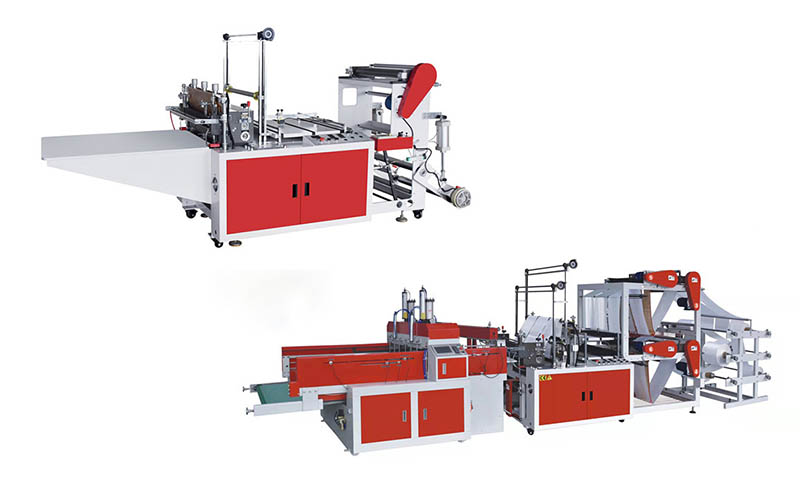
What Does “6 Lines” Actually Mean?
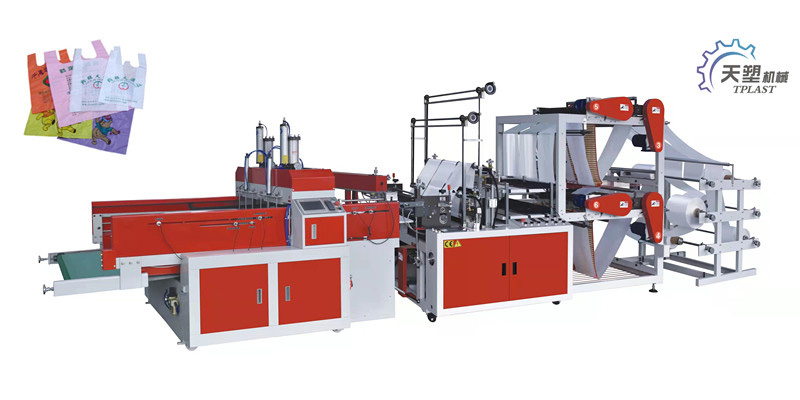
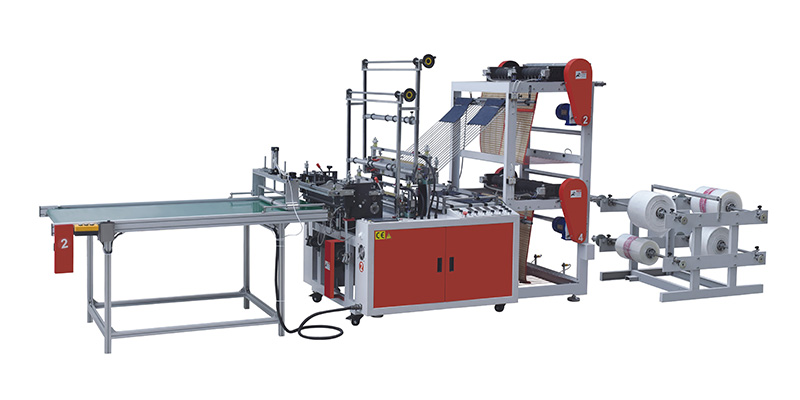
In bag making, a “line” refers to one parallel lane of bag production within a single machine cycle. A 6-lines bag making machine is equipped with six feeding devices and can produce up to six bags simultaneously in one sealing and cutting cycle. This is typically achieved through a double-layer configuration: two layers of film, each running three lanes, combining for a total of six lanes.
The key distinction from running six separate single-line machines is shared resources. A 6-lines machine uses one control system, one operator, one set of sealing bars, and one frame. The efficiency gain comes from consolidating multiple production lanes into a single automated workflow.
For perspective: a single-line machine typically produces 30 to 60 bags per minute. A six-lane machine can reach 180 to 360 bags per minute, with overall efficiency typically 3 to 6 times that of a single-line machine. Some configurations can achieve a total maximum output of up to 720 bags per minute across all six lines.
Once you understand the output potential of multi-lane configurations, comparing the specific features across different bag making machine models becomes the next step. See our bag making machine series for an overview of available lane configurations and automation levels.
6 Lines vs. Single Line – A Side-by-Side Comparison
The table below compares a 6-lines machine against a single-line machine across the factors that matter most in daily production economics.
| Comparison Factor | Single-Line Machine | 6-Lines Machine |
|---|---|---|
| Bags per minute | 30–60 | 180–360 (3–6× single line); up to 720 in some configurations |
| Operators required | 1 per 1–2 machines | 1 can supervise 3–6 lanes of equivalent output |
| Floor space per lane | Higher | Lower |
| Upfront investment | Lower per machine | Higher, but lower per-unit of output |
| Changeover time | Faster per machine | Longer; adjusting all six lanes requires more setup time |
| Ideal batch size | Small to medium batches | Large, continuous runs |
| Material waste | Standard per lane | Lower per bag due to continuous operation and edge recycling systems |
| Maintenance complexity | Simpler | More complex; more lanes = more components to monitor |
A critical nuance: a 6-lines machine is not simply “six times better.” The efficiency gain is real—often 3 to 6 times that of a single-line machine—but the machine also introduces complexity. Changeovers take longer because each lane must be adjusted. Tension must be balanced across all six film rolls. And when one lane has an issue, the entire machine may need to stop.
However, for manufacturers running large, continuous orders of standard bag sizes, the trade-off is favorable. The ability to scale output without adding floor space or additional operators makes the 6-lines configuration a compelling option for high-volume producers.
Five Questions to Determine If a 6-Lines Machine Fits Your Operation
-1559-1342.jpg)
Use this checklist to evaluate whether the investment aligns with your production reality.
1. What is your average order volume per SKU?
-
Under 10,000 bags per run → a 6-lines machine may spend more time in changeover than in production
-
Over 50,000 bags per run → the machine’s continuous output delivers maximum value
-
Long, repeat orders → ideal candidate
2. How many bag sizes and styles do you produce?
-
1–3 standard sizes → 6-lines works well; setup can be optimized
-
10+ sizes with frequent changes → changeover time may offset production gains
-
Multi-lane machines are best suited for long-term, high-volume production of a limited product range
3. What is your labor cost and availability?
-
High labor cost or labor shortages → automation delivers clear ROI
-
Low labor cost with abundant workers → multiple single-line machines may be more cost-effective
-
A 6-lines machine reduces labor intervention significantly; one operator can supervise multiple lanes
4. Do you have the upstream film supply to feed six lanes continuously?
-
Six lanes require six consistent film rolls with stable quality
-
Inconsistent film quality can cause downtime across all lanes
-
Upstream film consistency is critical—the multi-lane machine is only as fast and reliable as its feeder
5. What is your growth trajectory over the next 2–3 years?
-
Flat or moderate growth → a single-line or 2-line machine may suffice
-
Strong growth in standard bag volumes → 6-lines provides built-in scalability without additional floor space
For operations considering multi-lane production, upstream film quality directly impacts downstream efficiency. See how film blowing machine output and consistency affect your bag making line performance.
Where a 6-Lines Machine Excels – and Where It Doesn’t
Best fit scenarios:
-
Supermarket and retail bag suppliers producing high volumes of standard vest bags or flat bags
-
Export-focused manufacturers with large, consistent orders
-
Factories with limited floor space needing to scale output without expanding physical footprint
-
Operations with high labor costs looking to reallocate workers from machine tending to quality control or other value-added tasks
Less suitable scenarios:
-
Custom bag manufacturers producing short runs with frequent size and style changes—changeover time can erode the output advantage
-
Startups or small producers with limited capital and uncertain order volumes—the higher upfront investment may be difficult to justify
-
Operations with inconsistent film quality—defects in any one of the six film rolls can stop all six lanes
From Assessment to Decision – Making the Call
To summarize, a 6-lines bag making machine is not inherently “better” than a single-line machine—it is different, optimized for a specific production profile.
Choose a 6-lines machine if:
-
Your orders are large, repetitive, and predictable
-
You need to scale output without adding floor space or headcount
-
Your film supply is consistent and reliable
-
You are willing to invest in higher upfront cost for lower per-bag production cost
Stick with single-line machines if:
-
Your product mix changes frequently
-
Your average batch sizes are small to medium
-
You prefer lower initial capital expenditure and simpler maintenance
Neither choice is wrong. The right choice depends on your actual production volume, product variety, and growth plans. A 6-lines machine is a powerful tool for the right operation—and an expensive overinvestment for the wrong one.
Related Reading
After evaluating whether a multi-lane configuration fits your production needs, these related articles can help you complete the rest of your bag making line decisions:
-
Fully Auto vs Semi-Auto Bag Making Machine – Differences | TPLAST
-
Heat Sealing vs. Cold Cutting – Which Bag Edge Finish Suits Your Product Mix?
-
Film Blowing to Bag Making: Building an Integrated Production Line
-
Servo vs. Stepper Motor in Bag Making – Accuracy and Energy Considerations
-
Common Bag Making Defects – Causes and How to Prevent Them
This article is part of TPLAST’s technical content library. No direct sales or pricing information is included. All technical discussions aim to help you make informed purchasing decisions.